Ir al contenido

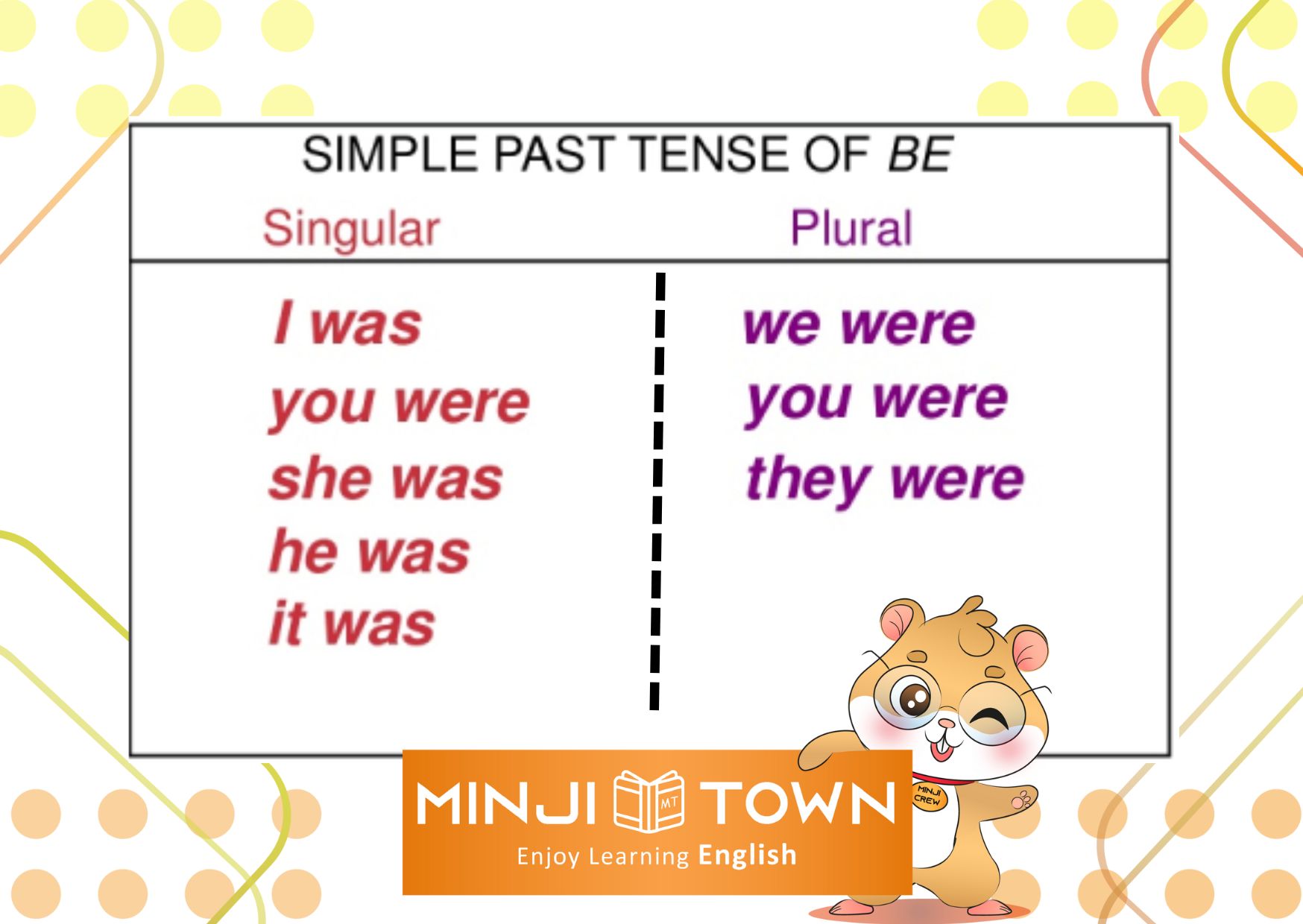
TO BE PAST TENSE

The form of the verb to be is am (contracted to 'm), is ('s) and are ('re) in the present tense and was/were in the past. To be is used as an auxiliary verb, to form continuous tenses and the passive, and as a main verb. Here we are looking at it as a main verb.
After the verb  to be  we use an adjective phrase, a noun phrase, a preposition phrase or an adverb phrase.
Here are some examples with adjectives or adjective phrases:

I'a bit tired.
He was late last time too.
The journey was fantastic.
My brother isn't very tall.

Here are examples with nouns or noun phrases:

She was an English teacher for years.
They're both teachers at our school.
That's my laptop.

And here are examples with adverb and preposition phrases:

I'here at the café, and you're not!
Are you there yet?
Your phone'in my bag.
Where were you a 5 o'Clock?